HealFern may earn a commission if you buy through links on this page, at no extra cost to you. That does not change what we report.
Part of our KeraBiotics overview. Last checked November 5, 2026.
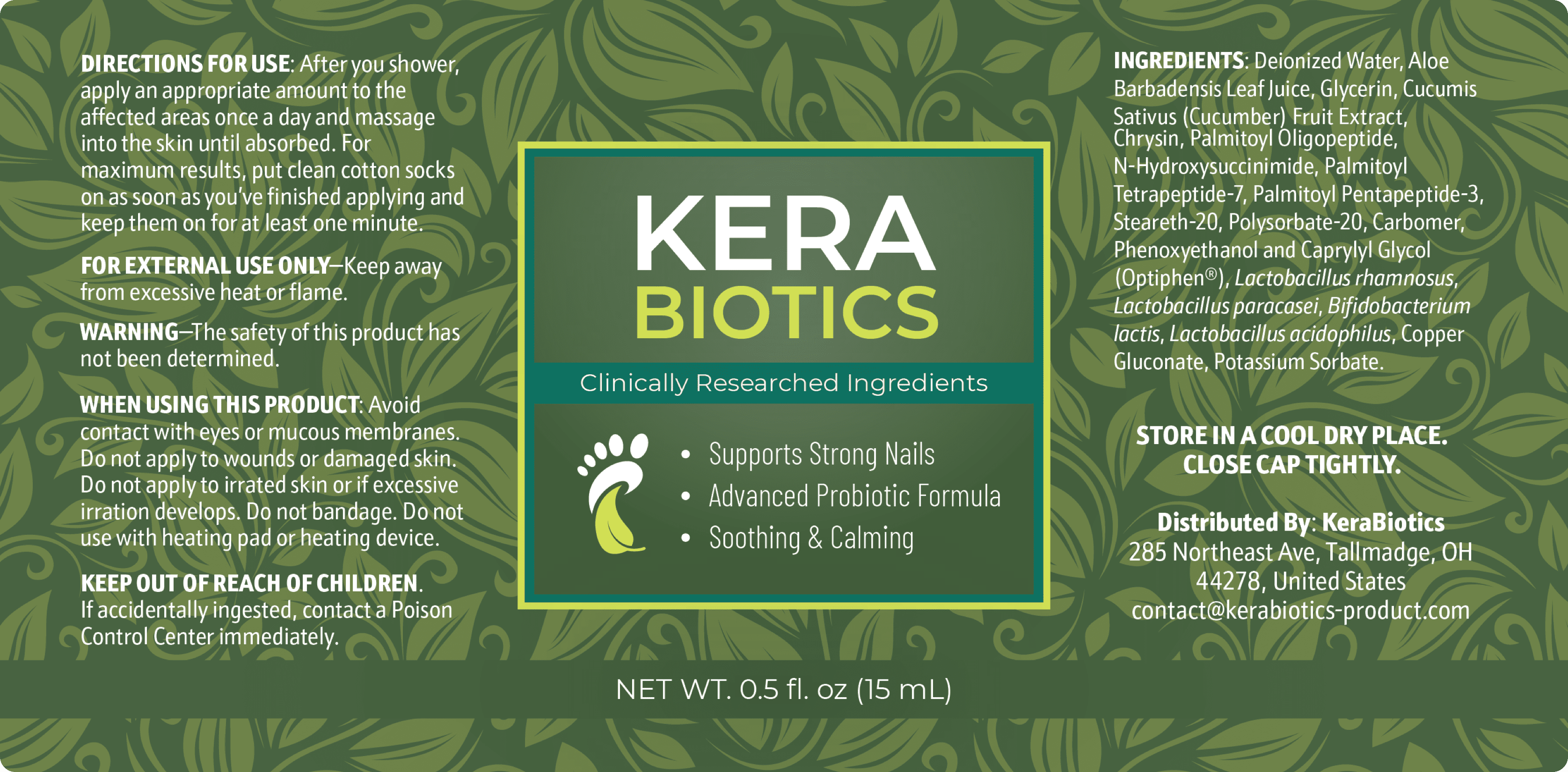
KeraBiotics side effects are unknown because no study has tested the product, and its own label says "the safety of this product has not been determined"[1]. The 15 mL liquid is for external use only. A search of FDA's openFDA recall and adverse-event records on November 5, 2026 returned no entries for KeraBiotics, which shows only that no reports were filed, not that it is safe.
Is KeraBiotics safe? Safety at a glance
Safety has not been established, and that is the first caution. The vendor printed that warning on its label, while its sales FAQ says all the ingredients were "proven to be safe in clinical trials"[2]. The label is the document to trust.
The label also lists these rules[1]:
- For external use only; keep away from heat or flame.
- Avoid contact with eyes and mucous membranes.
- Do not apply to wounds, damaged or irritated skin, and stop if heavy irritation develops.
- Do not bandage, and do not use with a heating pad or heating device.
- Keep out of reach of children; if swallowed, call Poison Control.
The sales FAQ also says it is "designed for all ages and medical conditions"[2], which conflicts with the children warning.
What side effects are possible?
No side effect rate exists for KeraBiotics, so the possibilities below come from its label and its ingredients. Skin irritation is the most likely concern for a liquid rubbed onto feet every day.
Digestive
KeraBiotics is not meant to be swallowed, so stomach effects are not expected with normal use. The mild gas or bloating that NCCIH links to probiotics applies to swallowed products[3]. If a child or adult swallows the liquid, the label says to contact a Poison Control Center right away (1-800-222-1222 in the US).
Skin sensitivity
The label warns against use on irritated skin and tells you to stop if heavy irritation develops[1]. The formula contains preservatives, emulsifiers, plant extracts and peptides. If redness, itching or burning starts, stop and wash the area.
Medication-related
No interaction study exists for KeraBiotics or for any of its ingredients used on skin. The concerns below are theoretical and come from oral data.
Which ingredients deserve extra attention?
Three ingredient groups carry the most open questions: the probiotics, chrysin and aloe. The table sets out what is known, mostly from studies of these ingredients swallowed, not applied to nails.
| Ingredient | Safety issue | Why it matters |
|---|---|---|
| Four probiotic species | Rare serious infections in people who are very ill, immunocompromised or premature infants (NCCIH, oral data) | No strain or CFU count on the label, and no topical safety data |
| Chrysin | Lab work shows it blocks some drug-processing enzymes | Theoretical only; no human interaction study |
| Aloe leaf juice | Oral aloe leaf products linked to liver injury cases and cramps (NCCIH) | Applies to swallowing; label does not say which aloe form is used |
| Whole formula | Label says safety has not been determined | No trial, no side effect counts |
Sources: NCCIH probiotics and aloe vera pages[3][4]; chrysin enzyme paper[5]. Each ingredient is covered in our KeraBiotics ingredients guide.
Which medicines could interact?
No interaction has been documented, but no one has looked. Show the label to a pharmacist if you use any of these medicine groups:
- Immunosuppressants or chemotherapy: NCCIH urges caution with probiotics when the immune system is weak[3].
- Prescription nail or skin antifungals: no data on putting KeraBiotics on the same nail; ask the prescriber.
- Oral antifungals such as terbinafine: these need liver blood tests, according to the American Academy of Dermatology[6]; tell your doctor about every product you use.
- Medicines with a narrow dose range: chrysin's enzyme effect is lab data only, but a pharmacist can judge it.
Pregnancy, breastfeeding and who should ask a doctor first
No safety data exist for any of these groups. Ask a doctor before using KeraBiotics if you:
- are pregnant or breastfeeding
- are buying it for a child (the label says keep out of reach of children)
- have diabetes, poor circulation or nerve damage in the feet
- have a weak immune system, a central line or a serious illness
- have cracked, broken or irritated skin around the nail
- have a known allergy to plant extracts or skin-care preservatives
- have not had the nail tested; the AAD says psoriasis and injury can look like fungus[6]
Which symptoms need a doctor right away?
Stop using the liquid and see a doctor right away if:
- skin around the nail turns red, hot, swollen or leaks pus
- red streaks spread up the foot, or you get a fever or chills
- you have diabetes and see a sore, blister or color change on the foot
- a rash, hives or swelling spreads beyond where you applied it
- the liquid gets in your eyes and stinging does not stop after rinsing
- someone swallows it: call Poison Control at 1-800-222-1222
Safety conclusion
KeraBiotics has not been shown to be safe or unsafe. The label says its safety has not been determined, and no study has counted side effects. If you use it, follow the label you receive, keep it off broken skin, and stop at the first sign of irritation.
Before buying, check whether it can help at all in does KeraBiotics work, and see how to apply it in our application guide. Our main-site guide to toenail fungus remedies covers tested options.
Back to the KeraBiotics overview.
Frequently asked questions
Can KeraBiotics irritate skin?
It may. No study has counted skin reactions, and the label says not to apply it to irritated, damaged or broken skin and to stop if heavy irritation develops. If redness, itching or burning starts, wash the area and stop using it.
Is KeraBiotics safe for people with diabetes?
No safety data exist for people with diabetes. Foot problems in diabetes can turn serious quickly, so a doctor or podiatrist should look at any nail change first and decide whether any product, including KeraBiotics, belongs in your foot care.
What happens if someone swallows KeraBiotics?
The label says to contact a Poison Control Center right away if it is swallowed. In the US that number is 1-800-222-1222. The product is for external use only, and the label says to keep it out of reach of children.
Has FDA received reports about KeraBiotics?
A search of FDA openFDA recall and adverse-event records on November 5, 2026 found no entries for KeraBiotics. That means no reports were found there. It does not show the product is safe, and FDA warning letters were not checked.
Can kids use KeraBiotics?
The label says keep it out of reach of children and that the safety of the product has not been determined. The sales FAQ calls it designed for all ages, which conflicts with the label. Ask a pediatrician about any nail problem in a child.
Sources
- KeraBiotics product label. KeraBiotics (vendor), read November 5, 2026.
- KeraBiotics sales page and FAQ. KeraBiotics (vendor), read November 5, 2026.
- Probiotics: What You Need To Know. National Center for Complementary and Integrative Health, NIH, read October 20, 2026.
- Aloe Vera. National Center for Complementary and Integrative Health, NIH, read October 20, 2026.
- Chrysin and drug-metabolizing enzymes (abstract). PubMed, read October 20, 2026.
- Nail fungus: diagnosis and treatment. American Academy of Dermatology, read November 5, 2026.
This page is general information, not medical advice. Dietary supplements are not reviewed by the FDA for safety or effectiveness before they are sold and are not intended to diagnose, treat, cure or prevent any disease. Talk to your doctor before taking any supplement, especially if you are pregnant, nursing, take medication or have a health condition.